MY STORY
From cleaner skies to a harder question at home.
I started this project with a simple question: when cleaner-energy transitions change how families heat and cool their homes, who helps ordinary households understand what actually fits their climate, budget, and living conditions?
From a household-energy study in northern China to a global climate-adaptation decision tool.
01 · THE QUESTION
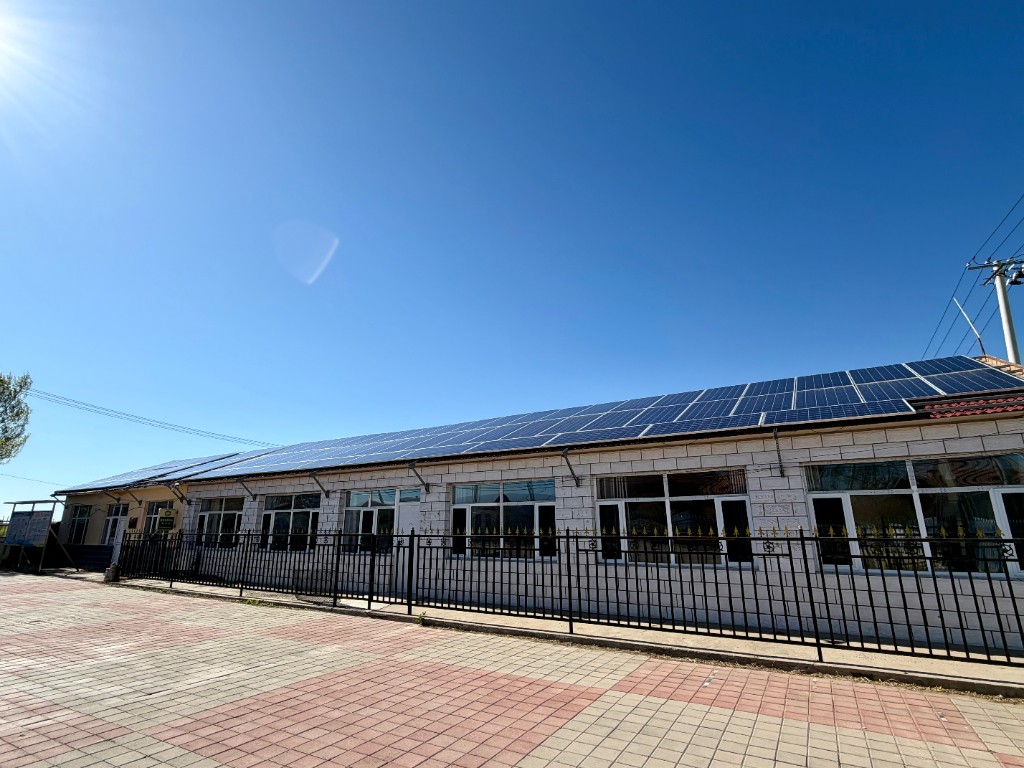
Cleaner air can be a success. The transition can still be difficult at home.
Energy transitions are often measured through emissions, infrastructure and policy. But households experience them through everyday questions: How much will this cost? Will the home stay warm in winter or cool in summer? How difficult is installation? What happens when a family does not know which technologies are available?
A climate solution also has to make sense at the household level.
Cost · Climate resilience · Household constraints · Access to information
02 · HOW IT GREW
One question became a pilot, and the pilot became a broader tool.
-
RESEARCH
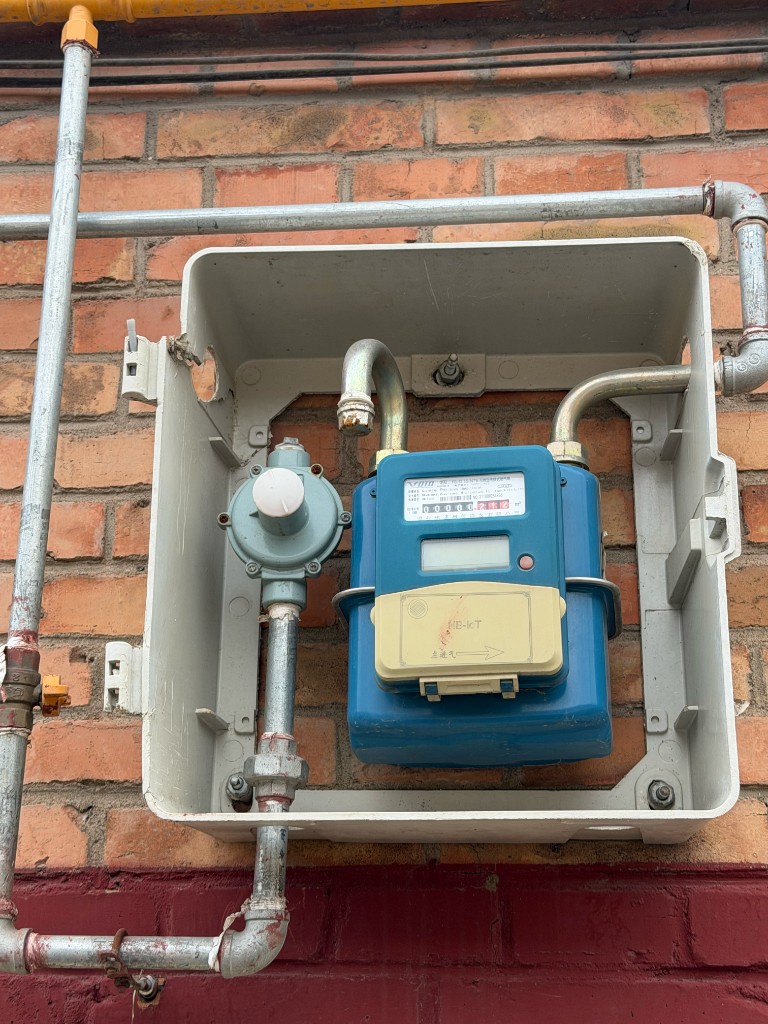
I began by studying how household heating transitions can create different experiences for policy, climate outcomes and household well-being.
-
CHINA PILOT
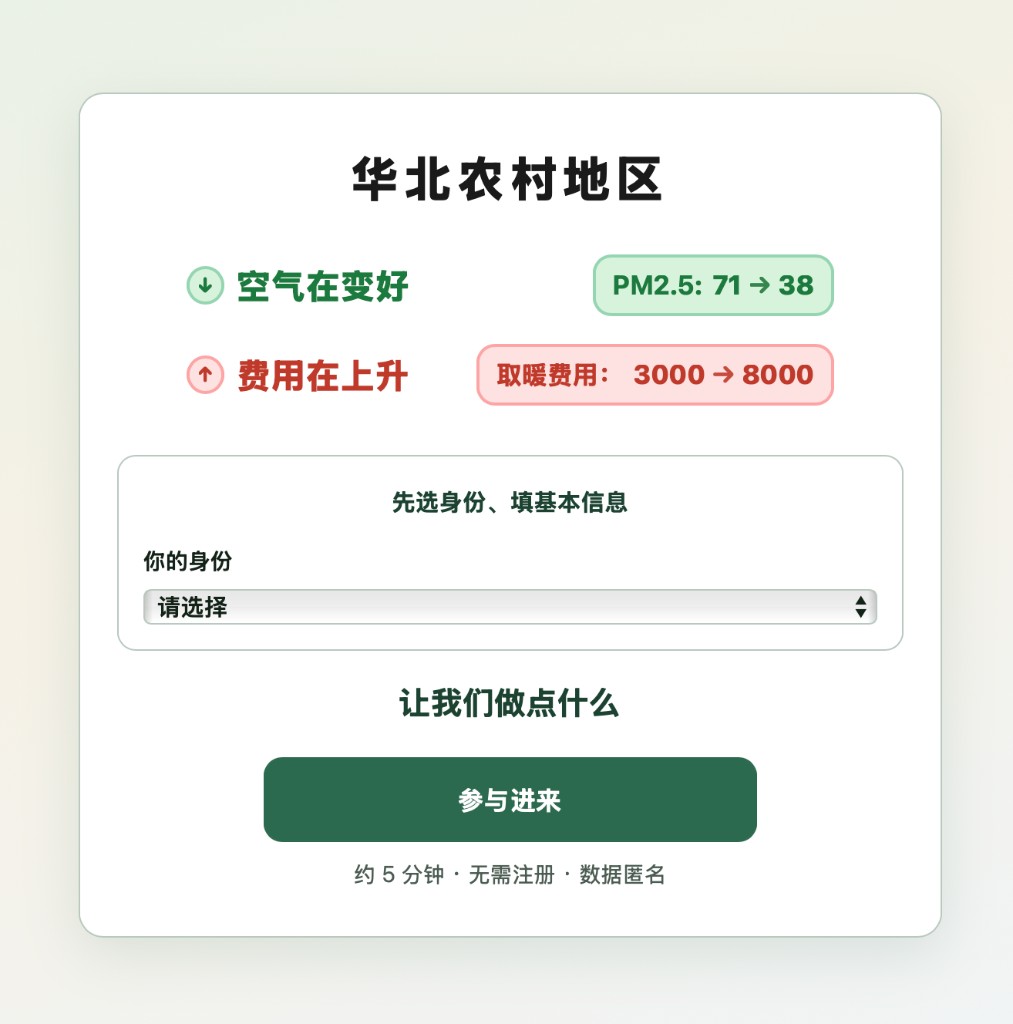
I then developed an interactive China pilot to explore how people understand household heating choices and their trade-offs.
50+ internal-test participantsLimited internal testing with students from my school and a small number of farmers and village committee staff from communities in Hebei. The China pilot has not been publicly released.
-
GLOBAL ADVISOR
The next step was to expand the question beyond one region and beyond heating alone: What happens when climate, household income, cooling needs, installation constraints and different technologies all have to be considered together?
-
NOW
The result is the Climate Adaptation Energy Advisor: a tool where deterministic rules calculate the ranking and AI helps people understand what the results mean.
03 · HOW THE TOOL WORKS
The score comes from the data. The explanation comes from AI.
-
YOUR HOME
The tool starts with what matters to the household: income, home size, energy bills, heating and cooling needs, and practical home conditions.
-
LOCAL PUBLIC DATA
It combines those answers with traceable public data for the user's location, such as climate, energy prices and emissions factors.
-
DETERMINISTIC SCORING
Eligible paths are compared through transparent formulas for affordability, climate resilience, environmental impact and practicality.
-
AI EXPLANATION
AI explains the existing scores in plain language. It does not calculate, change or reorder the results.
User answers + local public data → deterministic scoring → AI explanation
04 · EARLY IMPACT
What we are learning so far
Early feedback collecting now said the tool helped them better understand their options
Early and exploratory evidence. The China pilot was conducted as limited internal testing with students and participants from several Hebei village communities and was not publicly released. Global site visits represent recorded website visits, not verified unique individuals.
05
Built from a student question
I initiated the research question and led the project from the early study and China pilot through the design of the global advisor. My work has included project design, research, participant recruitment, analysis, product direction and the development of the decision framework. Also Listen to the opinions of industry insiders and feedbacks from users; collaborated with others during the process to refine the website model
06 · WHAT'S NEXT
There is no single best technology for every household.
The next goal is not to tell every family to choose the same solution. It is to make complex household energy choices easier to understand across different climates, incomes and homes.
-
MORE PLACES
Expand reliable local public data to more countries and regions.
-
MORE HOUSEHOLDS
Learn from a wider range of households, including people with tighter budgets or fewer local energy choices.
-
BETTER EVIDENCE
Use real user feedback to improve the questions, scoring transparency and explanations.
What could fit your home?
Explore heating and cooling paths using your own household information and local climate.